Thursday, July 25, 2013

Your Open Mind

Last night, I met three friends and one brand new one for dinner at Good Earth in Studio City. One of them, I travel the globe with. One of them I work with and wish I could travel the globe with. One is very good friends with the previous two and I am getting to know her- we went to the Monsanto Rally together in May. And one is a brand new friend, who will, I am sure, be one of my dear old friends in a few years.

When you get a group of women together, you never know what you are going to get. Often those with a personal history will touch on topics and the others will listen in, too unfamiliar to press for clarifying details, waiting for the conversation to turn into one they can participate in. Usually it revolves around men, botox and filler, or gossip.  This night, however, we had a group of socially and politically conscious women all in one place, and I wish wish WISH we recorded it.

Two of the friends are vegan. I love that they are, I think thats amazing. One of them is very insistent that I watch a documentary called Earthlings. Very insistent. She says she knows if I watch that I will never eat meat again. I am not ready for this- its already a challenge to re-train my taste buds that I eat much less than I used to, because that alone is a process. I don't really eat red meat, but in certain situations, I would. I eat chicken and fish. I rarely eat pork but I might have a little bacon with my fresh from the farm eggs. I just know that right this minute, I am not ready to go to that extreme. But it does seem like a natural progression. She and the other vegan choose that lifestyle out of moral imperatives towards animals. I choose to take on this shift in my life for political reasons, mostly. I love animals, but right now in my life, I am okay with eating them. Thats just me and where I am right now. I prefer to eat free range meat that has been raised gently, and not in meat factories. That works for me, right now.


There was another woman there who is a nutritionist. She could cite reasons for so much of the obesity, diabetes, and heart disease in the US, attributed mostly to the diet of most Americans. Americans eat shit. Seriously. Americans eat fast food constantly. Or they eat specifically with concern to weight, without changing their diets they opt for 'fat free',  or diet products, like diet coke. Lean cuisines and a diet coke is the staple lunch for office workers across the country.  Our food is often 85% GMOs. This woman, who I was quickly growing to love, then brought up the issue coming about in North carolina- this new platform to make the public display of a woman's nipples a felony, to which we all thought we would post pictures of our nipples in a show of resistance.  She also brought up fracking, passionately talking about what a danger it is to the future of all mankind and the planet, and the inevitability of this planet becoming completely incapable of supporting life if this practice continues. She isn't wrong. This planet and its ecosystem can only take so much. These could be the last few centuries of human life on earth if we don't all start to understand and do our part.

I watched these women get very upset by the complacency of other Americans. My vegan friends were angry at people who eat meat, and the nutritionist said she got so upset when people said, "GMOs are proven not to be bad for you," or, "there is plenty of water in the world, fracking will not affect our water supply." The ignorance of others makes them crazy. We had a long talk about that.  They come from families who always viewed people who did not think as they did as idiots. That quickly became the running joke at the table- anyone expressing a view that differed from anyone else the whole table would quip- "you're an idiot!" Its interesting to note that this stance is usually off putting to the very people who would benefit from their message, but I understand their passion and enthusiasm for what they believe in wholeheartedly.


I let my very good and dear vegan friend know that, if I didn't know her and she came preaching at me, I would think, "You're a real bitch, lady." She isn't, she is the furthest things from it, but if I didn't know her I would think it, because I am not where she is, my values are in a different place- that doesn't make me bad, or wrong, or an idiot. It just means I am where I am. There is an opportunity to enlighten me, to raise my consciousness about the issues that matter to her, but making me wrong won't do it. It feels judgmental, and no one likes that. We talked about that, how my vegan friend is not environmentally concerned, where I am all about recycling and re-using and being mindful. I was surprised to hear that, but thats all. The nutritionist says she eats some meat, just not red meat, and the two vegans sort of jumped on her about how she could know what she knows and still eat meat. She said it is simply what she is at peace with in her life, her reasons for making the choices might not be informed by the same passions they are driven by- sure, we all love animals. The nutritionist eats the way she does because she is concerned about her health. The vegans, out of a moral obligation they feel towards animals. My quiet friend that I work with eats the ways she does, which is very healthy, partly because she is a marathon runner and she gives her body what she knows it needs. Her stance is largely a pragmatic approach to being the best running machine possible. Also, she was raised by hippies in a vegetarian household and was never acclimated to processed or fast foods, so in that way, she doesn't need to make a stand in giving up foods that don't support her passion- those things were simply never present. Its just a way of life for her.

It was such a cool night, so many things were talked about, and I realized I was sitting with some really beautiful creatures. Like, not just in appearance- which, I might add, they all are stunning creatures- but they just all vibrate differently. They glow. They are filled with purpose and meaning, concern for animals, the planet, their bodies, women's issues, each other. Their lives are a testament to what they believe in, and all of them believe in greater good.  Including me- I should be saying 'We' here. We want to change the world, in our own corners of it where we live. It would be great if it rippled outward. Thats the goal.

 I want this journey of understanding my own place in the solution to be relatable, so that it might inspire others to do even just one thing differently. And then maybe another, and then to begin to enjoy it, to love the shift, to revel in it, to take on newer and better ways to live in harmony with all things, and to be so enthusiastic that others can't help but notice.

Here I am, working on my blog. I wish I had gotten pictures of all my friends last night- one thing is for sure, if I put real photos on a blog, I get twice as many hits. This is going to be yet another challenge, as I don't like to be photographed. But I will do what it takes to get your attention and connect. I care about you and your world! If you are reading this, you are exactly where you should be. Keep your mind open.

OCCUPY YOURSELF!


Saturday, July 20, 2013

Guerilla Gardening

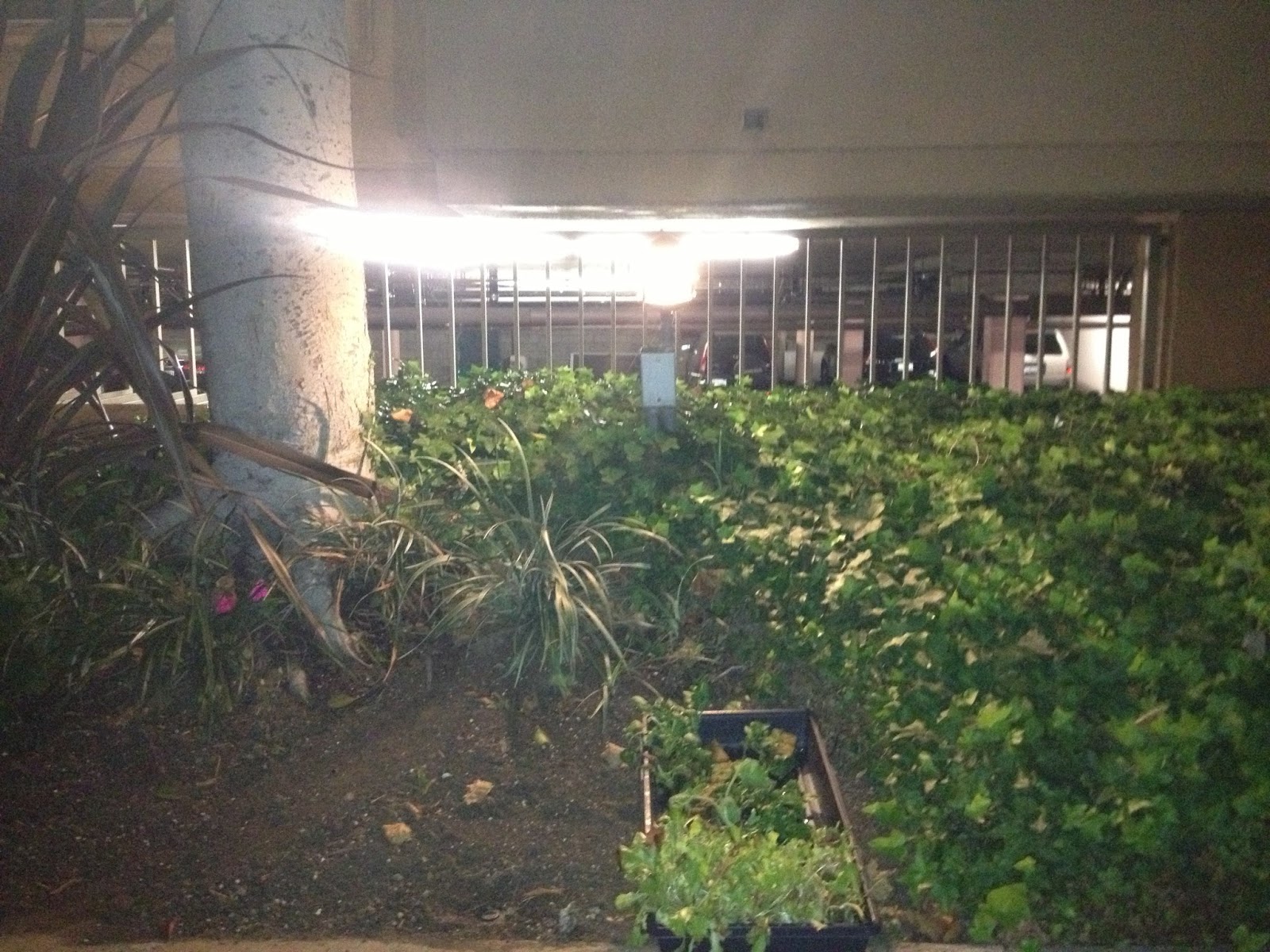
Tonight I committed my first act of guerilla gardening. I waited until it was dark, as I don't know what anyone would say if they caught you planting vegetables in their garden. I chose a space in front of an apartment building near my house- I noticed that they water it every night and it gets lots of sunlight.

I had about 14 plants- cucumbers, peppers, tomatoes- just a little bigger than seedlings. A friend of mine had too many left over from his garden tower project for the homeless, so I had more than I needed for my garden tower project. Perfect for my first plant bombing.

I love the idea of people everywhere using public spaces to create edible gardens- why not? There is plenty of useable soil that is getting watered. And, while I love flowers and anything green, why not plant something green that also makes food?


I must have heard the term guerilla gardening somewhere, but I am not sure. To be honest, I just googled it for the first time just this minute, and found that its actually a thing. I love it!

Its hard to tell from these photos, but here is the before picture- you can see my little tray of vegetable bearing plants on the right-


And here is the after photo. Again, its hard to really tell yet, they are so small its not a dramatic difference.


It was also really fun to do. I sort of don't do things that aren't fun if I can help it- but I do if I have to. However, this was indeed fun, and I would highly recommend that you get a gang of people together and go night planting in your neighborhood. Some really hardy plants to start right now are pumpkin plants. Tomatoes are high yield and aren't too finicky. There is a bank by my house with strawberries planted all along in front of it- of course I now love this bank and am thinking of changing over to them.

A lot of guerilla gardeners I am discovering, now that I am looking it up, will use flowering plants to beautify neglected areas, which is awesome, too. Any improvements with nature in areas that neglect to honor it is radical. I still maintain, for my purposes, that I prefer to plant edible plants like lettuces or herbs, or that produce vegetables or fruit.

Try it! Then post about it. Take pictures and upload to facebook- spread the word about the guerilla gardening movement and lets see what happens. This revolution is a gentle one, and calls for a return to simple ways and unplugging as much as we can from the system. We can not unplug completely, but we can all find ways to cut back and get down to brass tacks that work with our lives.

OCCUPY YOURSELF!

-Ashley Dane

I don't know these people, but I love them anyway

A Message For All Humanity


This is an amazing video montage, with the a moving and heartfelt speech by Charlie Chaplin in his movie The Little Dictator. Certain truths remain true no matter what the age might be, and this is no exception. Its very moving, and it calls on every one of us to step up and claim our natural birthright- many of us think we are already doing that, but we are sleepwalking to our graves, mollified by evil corporations that don't need to demand your loyalty- they have tricked it out of you, and require nothing else but your first born child- and your second, and all of them. If you are bought in to this system, its natural that your children will belong to them, too. Watch this video, and give it some thought. If it doesn't move and inspire you, please check and see if you have a pulse. Then watch it again. Its a message for you.


Thursday, July 18, 2013

Radical Recipes/ Crispy Brussel Leaves with Truffle (and a song to cook by)

I am really tickled that this blog has been getting so many hits! Whoever you are, reading this right now, I think about you all the time. I don't have to know you- but the fact that you are here, now, reading this- it means a lot to me to be able to write this- for you. I don't write this blog for me.

So last weekend, I went to one of my favorite little eating spots, La Poubelle. I love that the name means 'trash can' in French; I love anything irreverent and cheeky. Inside, you can barely see what's going on- its primarily lit by candles and dim Edison bulbs. The music they play is really good, and instead of the usual sports on the TV behind the bar, there is usually an old black and white movie. Its all about the atmosphere, and that suits me just fine.

La Poubelle Bistro in Los Angeles


There is a dish there that I really like, which surprised the hell out of me. Crispy brussel leaves. Sounds weird, right? But it is sooo good. And in my new lifestyle of eating in ways that will not support evil food corporations, it seemed to me that learning to make this dish would be a yummy alternative to some of the other things I am trying to eliminate, like Kraft mac and Cheese, for example. Or any brand with GMOs, or an affiliation with Monsanto. Or steak. (I don't know that I am going vegetarian, but I can see how limiting my meat intake, which used to be DAILY, has its merit in taking this stand.)

I made them today, and they were AMAZING! And easy. I won't ever share a radical recipe on here that is time consuming and tedious- I just don't have the kind of life where I can commit to hours in the kitchen.  But I want a lot from my short time in the kitchen- and I bet you feel the same way.

Here is what you need-

1 lb brussel sprouts- fresh ones, not frozen, preferably organic!!
1 cup extra virgin olive oil (click the link for a study by UC Davis on fraudulent extra virgin olive oil, as well as non GMO brands)
salt, or truffle salt, if you like truffle

there are two tricks to make this work- very hot oil, and peeling the leaves off the brussel sprouts. I found that if you cut the stalk-y end of the brussel sprout, you can peel the first few layers off easily, then you have to cut a little more off again to loosen the leaves from the center of the stalk. This is the most time consuming part of this culinary adventure. I suggest putting on some good music so your mind won't spin out and make you start thinking about other things you need to do- it happens a lot, and that takes one out of the experience. Just be with the task, don't rush. Here is a good song for peeling leaves by-


When you are half way through, put oil in a pan- you can use a frying pan- a wok is better- but what I learned today is that when you put those things in super hot oil, it spatters like a mofo.  Once you sense that the oil is good and hot, get a lid or a cooking screen ready to throw over it after you toss the leaves in the oil. I had a glass lid, so I could see what was going on underneath. I sort of held the lid over the skillet and tossed the leaves around in the oil, moving them so they didn't burn. You want them to get crispy and a little brown around the edges, though.  Maybe 3 minutes, depending on your stove top.

Once they are done, spoon them out with a draining spoon, allowing the oil to drip off for a few seconds, and onto a plate. Sprinkle them liberally with salt or truffle salt. I promise you, even if you think you can't stand brussel sprouts (I did) this is surprisingly delicious.

I am no cook, so I can't tell you how many people a pound will feed. If you are like me, then I would say make it once for yourself to see if you like it and gauge your own measurements for future reference.

I hope you like it! You certainly don't get the ambience of La Poubelle, but its way cheaper than $15 for a small dish of it. I will be eating a lot of this as I continue to replace my processed, super convenient food preferences with healthy alternatives. I get excited about this stuff, as this is the little tiny revolution that is a game changer for me and for my family- we are taking a stand not to support the major food corporations that seek to dominate the world food supply, while killing our bees, making us fat and threatening our overall health with GMOs. Screw that. There is yummy food in the world that isn't in a box or a bag or shrink wrapped or in a can. Believe it! OCCUPY YOURSELF!!!

Me and my sprouts, and me with a mouthful of sprouts, because I am a cheeky brat.


Wednesday, July 17, 2013

Bees In Crisis/ Greenpeace

So I am totally borrowing this blog from Greenpeace. Mostly because it says so much, and for me to try to figure out a way to say the same thing with different words seems like a waste of time. That, and I am learning a new recipe for the next blog, and I am not gonna tell you what it is until I taste it. What I will tell you is that I am craving a Coke, and a pizza, and that is not what I am about to eat. I also need to groom my yorkies. And I am on the last episode of Mad Men. That is my Wednesday evening for you. Enjoy this re-post of a really insightful article, which was sent to me by my good and soulful friend Darkbloom.
 
If you, dear reader, are in LA, there is a Honeylove urban beekeeping event on July 21. Go to the honeylove website. I will be there!
 

BEES IN CRISIS

 
Save the Bees!!!!
 
 
"In the last four years, the chemical industry has spent $11.2 million on
a PR initiative to say it's not their fault, so we know whose fault it is."
― Jon Cooksey, writer, director: How to Boil a Frog
.

The honey bee, responsible for 80 percent of pollination worldwide, is disappearing globally.

Why and why do bees matter?


This is no marginal species loss. Honey bees – wild and domestic – perform about 80 percent of all pollination worldwide. A single bee colony can pollinate 300 million flowers each day. Grains are primarily pollinated by the wind, but the best and healthiest food – fruits, nuts, and vegetables – are pollinated by bees. Seventy out of the top 100 human food crops, which supply about 90 percent of the world's nutrition, are pollinated by bees.

We know what is killing the bees. Worldwide Bee Colony Collapse is not as big a mystery as the chemical companies claim. The systemic nature of the problem makes it complex, but not impenetrable. Scientists know that bees are dying from a variety of factors – pesticides, drought, habitat destruction, nutrition deficit, air pollution, global heating, and so forth. The causes of collapse merge and synergise, but we know that humanity is the perpetrator, and that the two most prominent causes appear to be pesticides and habitat loss.

Worker bees (females) live about 6 weeks in summer, and several months in the winter. Colonies produce new worker bees continuously during the spring and summer, and then reproduction slows during the winter. Typically, a bee hive or colony will decline by 5-10% over the winter, and replace those lost bees in the spring. In a bad year, a bee colony might lose 15-20% of its bees.

In the US, winter losses have commonly reached 30-50% and in some cases more. In 2006, David Hackenberg, a bee keeper for 42 years, reported a 90% die-off among his 3,000 hives.US National Agriculture Statistics show a honey bee decline from about 6 million hives in 1947 to 2.4 million hives in 2008, a 60% reduction.

The number of working bee colonies per hectare provides a critical metric of crop health. In the US, among crops that require bee pollination, the number of bee colonies per hectare has declined by 90% since 1962. The bees cannot keep pace with the winter die-off rates and habitat loss.

Pesticides and bees


Biologists have found more than 150 different chemical residues in bee pollen, a deadly "pesticide cocktail" according to University of California apiculturist Eric Mussen. The chemical companies Bayer, Syngenta, BASF, Dow, DuPont, and Monsanto shrug their shoulders at the systemic complexity, as if the mystery were too complicated. They advocate no change in pesticide policy. After all, selling poisons to the world's farmers is profitable.

Furthermore, wild bee habitat shrinks every year as industrial agri-business converts grasslands and forest into mono-culture farms, which are then contaminated with pesticides. To reverse the world bees decline, we need to fix our dysfunctional and destructive agricultural system.

Solutions exist

Common sense actions could restore and protect the world's bees.

  1. Ban the seven most dangerous pesticides
  2. Protect pollinator health by preserving wild habitat, and
  3. Restore ecological agriculture


Ecological farming is the over-arching new policy trend that will stabilise human food production, preserve wild habitats, and protect the bees. The nation of Bhutan has led the world in adopting a 100% organic farming policy. Mexico has banned genetically modified (GM) corn to protect its native corn varieties. In January, eight European countries banned GM crops, and Hungary has burned over a 1,000 acres of corn contaminated with GM varieties. In India, scientist Vandana Shiva and a network of small farmers have built an organic farming resistance to industrial agriculture over two decades.

Ecological, organic farming is, of course, nothing new. It is the way most farming has been done throughout human history. Ecological farming resists insect damage by avoiding large monocrops and preserving ecosystem diversity. Ecological farming restores soil nutrients with natural composting systems, avoids soil loss from wind and water erosion, and avoids pesticides and chemical fertilisers.

By restoring bee populations and healthier bees, ecological agriculture improves pollination, which in turn improves crop yields. Ecological farming takes advantage of the natural ecosystem services, water filtration, pollination, oxygen production, and disease and pest control.

Organic farmers have advocated better research and funding by industry, government, farmers, and the public to develop organic farming techniques, improve food production, and maintain ecological health. The revolution in farming would promote equitable diets around the world and support crops primarily for human consumption, avoiding crops for animal food and biofuels.

How can the US learn from Europe?

In Europe, Asia, and South America, the annual die-off lags behind the US decline, but the trend is clear, and the response is more appropriate. In Europe, Rabobank reported that the annual European die-offs have reached 30-35% and that the colonies-per-hectare count is down 25%.

A European Food Safety Authority (EFSA) scientific report determined that three widely used pesticides – nicotine-based clothianidin, imidacloprid and thiametoxam – pose "high acute risks" for bees. The nicotinoid pesticides – used in soils, on foliage, and embedded in seeds – persist at the core of the toxic pesticide cocktail found in bee hives.

A Greenpeace scientific report identifies seven priority bee-killer pesticides – including the three nicotine culprits – plus clorpyriphos, cypermethrin, deltamethrin, and fipronil. The three neonicotinoids act on insect nervous systems. They accumulate in individual bees and within entire colonies, including the honey that bees feed to infant larvae. Bees that do not die outright, experience sub-lethal systemic effects, development defects, weakness, and loss of orientation. The die-off leaves fewer bees and weaker bees, who must work harder to produce honey in depleted wild habitats. These conditions create the nightmare formula for bee colony collapse.

Bayer makes and markets imidacloprid and clothianidin; Syngenta produces thiamethoxam. In 2009, the world market for these three toxins reached over $2bn. Syngenta, Bayer, Dow, Monsanto, and DuPont control nearly 100% of the world market for genetically modified pesticides, plants and seeds.

In 2012, a German court criminally charged Syngenta with perjury for concealing its own report showing that its genetically modified corn had killed livestock. In the US, the company paid out $105m to settle a class-action lawsuit for contaminating the drinking water for over 50 million citizens with its "gender-bending" herbicide Atrazine. Now, these corporate polluters are waging multi-million-euro campaigns to deny responsibility for bee colony collapse.

In May, the European Commission responded, adopting a two-year ban on the three necotinoid pesticides, and later added the non-neonicotinoid fibronil. Scientists will use the two years to assess the recovery rate of the bees and a longer-term ban on these and other pesticides.

Meanwhile, the US dithers and supports the corporations that produce and market the deadly pesticides. The US Environmental Protection Agency (EPA) continues to allow the use of neonicotinoid pesticides, in spite of a US Department of Agriculture report warning about the dangers of the bee colony collapse.

Also in May, US president Obama, signed the now infamous "Monsanto Protection Act" – written by Monsanto lobbyists – that gives biotech companies immunity in federal US courts from damages to people and the environment caused by their commercial compounds.

Monday, July 15, 2013

Can You Survive in a Post Apocalyptic World?

Lately when I am driving, or lying in bed before I fall asleep, I have been thinking about the End Times. Yep, the oft referred to end of days, when humans finally cannibalize themselves to the point of complete destruction.

Don't be skeered. I am not fanatic about it. What I wonder is how I would fare in a survival setting, and how useful would I be to others. This is not really surprising to me, as I recently went through a spate of post apocalyptic movies- 28 Days Later, 28 Weeks Later, Legend, Children of Men, World War Z, and of course, Walking Dead. Most of these focus on zombies- but as I have said in other blog posts- the zombie apocalypse is already upon us. What happens when the zombies destroy the fabric of society in their mindless consuming? (To wit, a great quote from Judith Froemming-A true zombie is nothing more than an unconscious being apathetically and lifelessly lumbering across the planet buying and consuming everything in its path, unsatisfied, unfulfilled, anxious and unstill.”)

Zombie Attack Survival Kit- a must have


The zombies have me very nervous. They are everywhere on parade, all over the internet and facebook. They really have no thought at all about anything except what to consume next, or what entertainment is available next. But all of this could culminate in a bad scene for all of us, and I wonder about that. First- I wonder if there are enough people who are conscious and aware to stop the madness. I wonder if we are doing enough, or if there is enough we can do. I will continue to do the best I can, and just maybe I will start preparing.


So I got a survival book. And it got me thinking about all kinds of stuff I didn't need to start thinking about. Why? Well, it shakes me up, for one. Like the section of the book about survival dentistry. When I think about survival, I always picture myself smashing zombies in the face, or building a fire, or getting supplies from a heavily looted grocery store, armed to the teeth. That one chapter put the reality of it in perspective. Its not a movie. If it happened, there are skills we don't have the first idea about. Dentistry? Setting bones? Surviving in a desert with no readily available clean water sources? Not nearly as fun as zombie killing.

But this new movement I have been privy to, with people learning to garden and create beehives, and even those who have acquired chickens (seriously, there is an urban chicken movement- and it makes sense- fresh eggs? Why not?) in urban environs will fare better than those who have not been learning to get back to simpler ways. If society were to quickly revert to having no power and no water, then these simple skills are going to come in very handy. So, in a very real way, one can both prepare for, and help prevent, an apocalypse. If more of us did these things, and we got more people to grow food, buy local, keep beehives,  drive less, recycle, look into sustainable ways of living- if we were able to tip the scales, we could help prevent a possible catastrophic future. And if it came anyway- we would be in a good position to survive it.

Urban homesteading is on the rise


So sure, there are things like having stores of canned food and water, that's never a bad idea- and first aid kits, and survivalist books, and all of that. I recommend preparedness on any level, for any thing.  But when it comes down to it, people have been living off the earth naturally for millennia. Its the most radical thing you can do right now, in this day and age- to look at all that you consume- from food and entertainment, to ideas and thoughts- all of it could be re-evaluated and re-prioritized. I say start with food, and let the rest come. Food is by far one of the hardest to change, but once you make that commitment to eating foods with no GMOs, shopping local so the foods are not shipped to you grocery store by plane and trucks- thereby wasting precious fossil fuels, giving your body nutrient dense superfoods so you stay healthy (and not just for the sake of health, per say, but because a healthy body is a BIG fuck you to the system- they make a ton of money of our being sick, tired, stressed), avoiding processed food, growing what you can, perhaps having a beehive to help our dying bees and so you can have fresh honey, definitely avoiding all fast food restaurants, and being a good example to others by talking about it and walking the walk you are talking about- if you just start here, with one of those things, it will grow all on its own. The rest will fall into place, in its own time and its own way. It will not feel like a sacrifice, but a gift. You will feel like a light bulb that has never been turned on before now, and finally you have found your purpose.

 I would like to not have to run through abandoned streets with a bad ass cross bow on my back, scavenging for what I can not grow on my own, or practice survival dentistry on my loved ones and learn to filter my pee to water a garden, but if we don't start somewhere, do something, and now, this may be the case.  The time is now. Don't hit the snooze button. OCCUPY YOURSELF!

Saturday, July 13, 2013

Urban Gardening

Right about the time I realized I needed to change the way I was looking at, and living, my life, I was lucky enough to have two unused garden towers in my proximity that I could learn to use. At my work, my boss had purchased two of them, but no one had championed the cause. It was perfect synchronicity. How many people living in cities don't have the option of growing their food, due to lack of soil or space? Plenty, I bet. Me included.

I also have the good fortune of having someone show me how to get these things started. There are so many ways to talk oneself out of doing something- "I don't know how", or "Maybe next week," or "I can't afford it," or "It won't work." The universe in all its goodness eliminated all such conversations from my head. If I can learn how to do these things, I can teach others. Its amazing to me that the most radical thing any of us can do is to get back to nature as much as possible- and there is nothing more natural than growing your own food.

So my friend who came to help also takes care of the garden towers at Step Up on Second, which is an organization which helps the homeless in Los Angeles. They have a small café where they serve hotdogs and hamburgers, and the homeless people on the program work the café and learn how to have a job. There are many aspects to this organization, and they are doing amazing work. One aspect is the garden towers on the roof- I think he said there were 25 of them, and they grow food that they can use to help feed the homeless people who come through while they teach them how to be self sustaining.  Here is a picture below- pretty amazing. By the way- you can make monthly payments for a garden tower, and they payments are reasonable.

Garden Towers at Step Up on Vine

My friend and I first started to create the seedlings. I got seed packets of peppers, cucumbers, tomatoes, arugula. We put rock wool into plastic trays with individual growing bins- you do this so the roots don't grow into each other. Then you put 4 or 5 seeds in each one, and cover with a nutrient rich covering. Its important to mark what you planted- we did it with coffee stirrers with the name of the vegetable and the date on the back. Then you soak the seed beds, but be careful not to disturb the seeds.

The start of an urban garden


If you were not going to use a tower and were going to go guerilla gardening (which I implore you to do) then you would do the same thing but you could use potting soil which is already fortified with nutrients. In guerilla urban gardening, you would plant vegetables or other edibles in public spaces, or in front of your apartment building, on medians, on the courthouse lawn, parks, etc. Nothing at all wrong with doing this!  once your seedlings are good and strong, plant them where they will be able to get water- any public landscaping will have sprinkler systems.

So in about two weeks, we will have little seedlings. Every day I need to lightly water the seedlings and not leave too much water in the bottom tray- or they roots will grow down towards the water, and we'd rather encourage the plants to grow towards the sun.


Once they are seedlings, we transfer them to the garden towers. The towers only need to be filled with water and the nutrient solution and then you basically leave them alone and let them grow. You need to have access to an outlet as they need to plug in for the water to pump up through to each little basket. My first plants I put in my garden tower are growing- some died. White flies got to many of them. If you have white flies, a water and dish soap solution sprayed onto the leaves makes them go away.


Here is my vision- I want to teach people how to create urban gardens and beehives. Bees have a higher rate of survival in cities, and you can have your own source of honey. The gardens can give you certain vegetables and fruit- I am staying away from things like lettuce or herbs right now and focusing on things like tomatoes and peppers and cucumbers- its easy enough to get salad stuff from the farmer's market. I would like to help people understand the importance of buying from their local farmer's markets- its fresh, generally organic, and has not taken a lot of fossil fuels to send on trucks and airplanes from distant countries to your grocery store chain. I know we can't grow everything, and we can't buy everything at the farmer's market- but we can do a lot, and its a great start.

When I go to the farmer's market, I look at the people there and am so happy to be among like minded people. Its revolutionary. Buying local instead of at the supermarkets takes money out of the hands of those who seek to control the world's food sources.  There is much more at the farmer's market than produce- there is bread, meat, fish, eggs- you can get a lot of your shopping done there. the more you buy there, the more you are telling the GMO food corporations like Monsanto and Syngenta to fuck the fuck off.

OCCUPY YOURSELF!!!